










DarkSky’s positions and statements address critical issues related to light pollution and dark skies, guiding our priorities, communications, advocacy efforts, and policy agenda.
Grounded in the Five Principles for Responsible Outdoor Lighting, organizational statements are developed by the executive team, with official positions being reviewed and approved unanimously by the DarkSky Board. Here’s where we stand:
Reflect Orbital proposes to use satellite-mounted mirrors to reflect sunlight back to Earth at night, creating artificial illumination from space at levels brighter than a full moon. DarkSky opposes Reflect Orbital’s proposal in its current form. In alignment with the Five Principles for Responsible Outdoor Lighting and our position statement on satellite mega-constellations, we find orbital illumination systems to be an unprecedented threat to the nighttime environment, posing serious risks to wildlife, astronomical research, public safety, and community wellbeing. Such systems should be subject to full environmental review under the National Environmental Policy Act (NEPA).
DarkSky has written an open letter to Reflect Orbital and its investors and urges our community to sign on. Signatories may opt in to receive updates on this effort, including guidance on how to submit comments to the FCC during the January 2026 comment period.
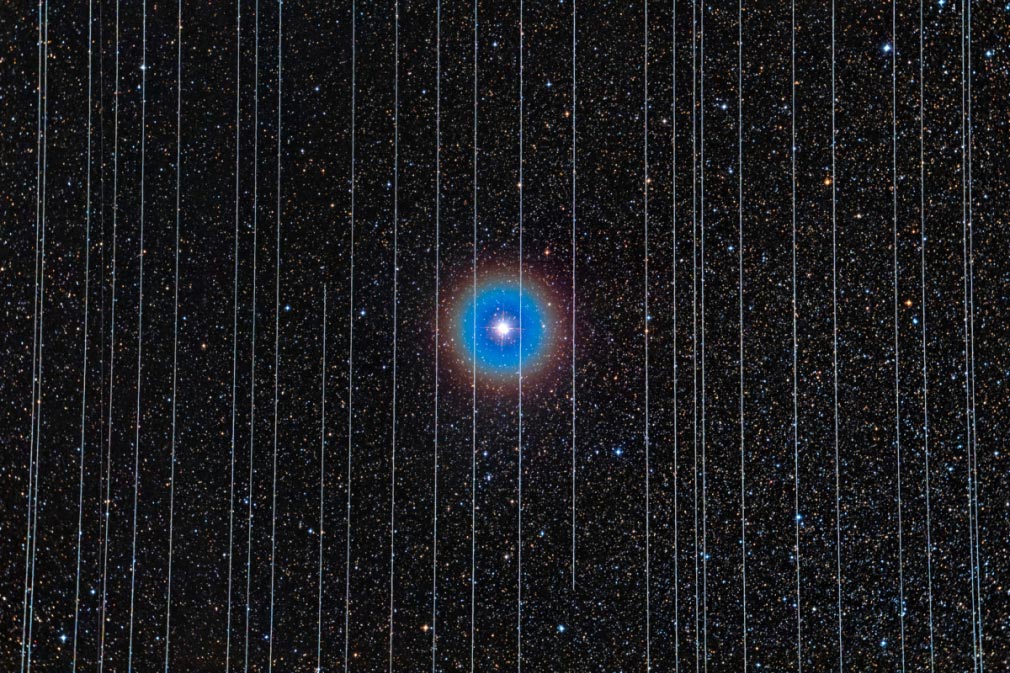
Mega-constellations, also known as low earth-orbit (LEO) satellite constellations, are webs of networked satellites that orbit the Earth at altitudes of 2,000 km or less, providing global telecommunications services. The brightness and frequency of the objects have caused concern among the astronomy community and the general public.
The sheer number of satellites, combined with the brightness of the objects and the frequency of sightings, is a serious threat to the dark sky community. Astronomers, astrophotographers, and stargazers have all shared concerns about satellite mega-constellations polluting the night sky.
DarkSky is especially concerned about the threats that satellite mega-constellations pose to International Dark Sky Places. These places have taken measures to protect natural darkness, and offer millions of people around the globe the opportunity to observe the splendor of the night sky.
By the end of 2030, it’s projected that 50,000 satellites will be in low Earth orbit — a 2,400% increase in a single decade. The reflected light from these satellite swarms may increase the night sky’s brightness by 250% — erasing 50% of all stars from view.
Simulations also show that without mitigation, approximately one out of every fifteen points of light in the night sky will be a satellite. This would fundamentally alter the night sky so that for the first time in history, we would see more human-made patterns in the sky than we would see the stars.
DarkSky’s five principles to preserve the quiet enjoyment of the night sky and protect the general public from the impacts of satellite mega-constellations are:
Adopted January 2020; amended September 2021
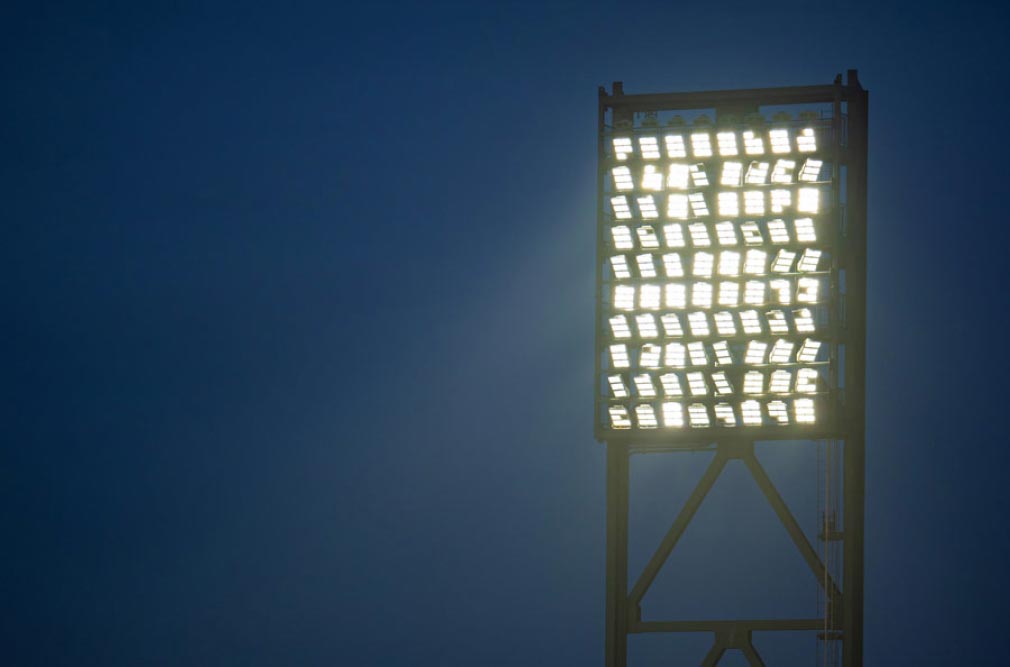
In recent years, we’ve witnessed a marked increase in the number of outdoor sports lighting complexes built in urban and suburban neighborhoods. These facilities are constructed at schools, parks, and neighborhood complexes. The excessive amount of light associated with these complexes can be a nuisance for neighborhoods and create significant environmental impacts.
Recognizing the urgent need for leadership to encourage and promote community-friendly sports lighting designs, the DarkSky Technical Committee released the following criteria:
By adopting DarkSky’s Community-Friendly Outdoor Sports Lighting (OSL) program guidelines, your community will:
Adopted March 2018
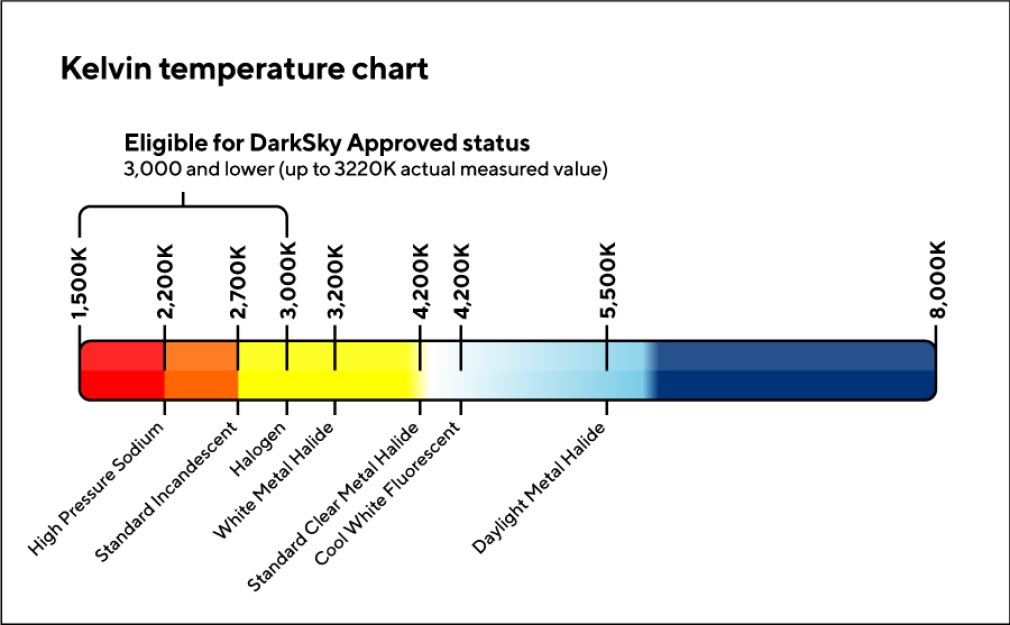
With the increasingly widespread use of white light-emitting diodes (LEDs), DarkSky is concerned about the potential negative effects of blue-rich white light, even from fixtures with proper shielding. In 2010, we published a white paper outlining the potential hazards of blue-rich white light sources. Since then the scientific evidence has solidified around its conclusions.
The case against blue light is well founded with regard to discomfort, glare, circadian rhythm disruption in humans, light scattering, sky glow, and biological system disruption in wildlife. Outdoor lighting with high blue-light content is more likely to contribute to light pollution because it has a significantly larger geographic and atmospheric reach than lighting with less blue light. In natural settings, blue light at night has been shown to adversely affect wildlife behavior and reproduction. This is true even in cities, which are often stopover points for migratory species.
In 2014, the DarkSky Approved Lighting program (then known as the Fixture Seal of Approval) updated our certification standard to require that certified lighting have a correlated color temperature (CCT) no higher than 3000 K (up to 3220 K actual measured value — ANSI C78.377). DarkSky seeks the best possible scenario for new LED installations and retrofits to: 1) replace old technology without increasing light output; 2) minimize short-wavelength emissions; and 3) decrease operational costs and energy consumption.
We promote environmentally responsible outdoor lighting; support the research, development, and adoption of new technologies; and encourage the lighting industry to continue the march toward lower-CCT lighting products with less short-wavelength emission.
Adopted 2014, amended in 2016

In the United States, few locations remain where the night is naturally dark. One of these is stretches forms part of the border between the United States and Mexico. In April 2022, the Greater Big Bend International Dark Sky Reserve, which straddles the U.S.-Mexico border, was certified in recognition of decades of work to protect its dark skies.
Today, high-power stadium lights threaten some of these last dark places. Recognizing this, DarkSky’s Board of Directors recently reviewed the situation and adopted the following position:
This decision relates solely to the installation and use of light, not the overall border wall project.
Adopted July 2022 (read more in the blog post).
Access to a naturally dark sky and quality lighting are not a privilege but a right of all people. Light pollution impacts low-income communities disproportionately — and has only recently been recognized as an environmental justice issue, despite a troubling history. Harsh, inappropriate lighting affects quality of life and robs communities of their connection to the cosmos. Unfortunately, inappropriate lighting is widely used by municipalities and housing developments under the guise of safety. Light justice is as much about access to responsible, community-friendly lighting as it is about access to the pure night sky.
Our work to promote light justice starts from within. Recognizing that this effort is a marathon and not a sprint, our team has worked over the last year to look inward through the lens of inclusion, diversity, equity, and access (IDEA). With expert guidance, DarkSky’s team collectively revisited its purpose, vision, and core values to include robust and direct language addressing IDEA principles.
Adopted July 2021
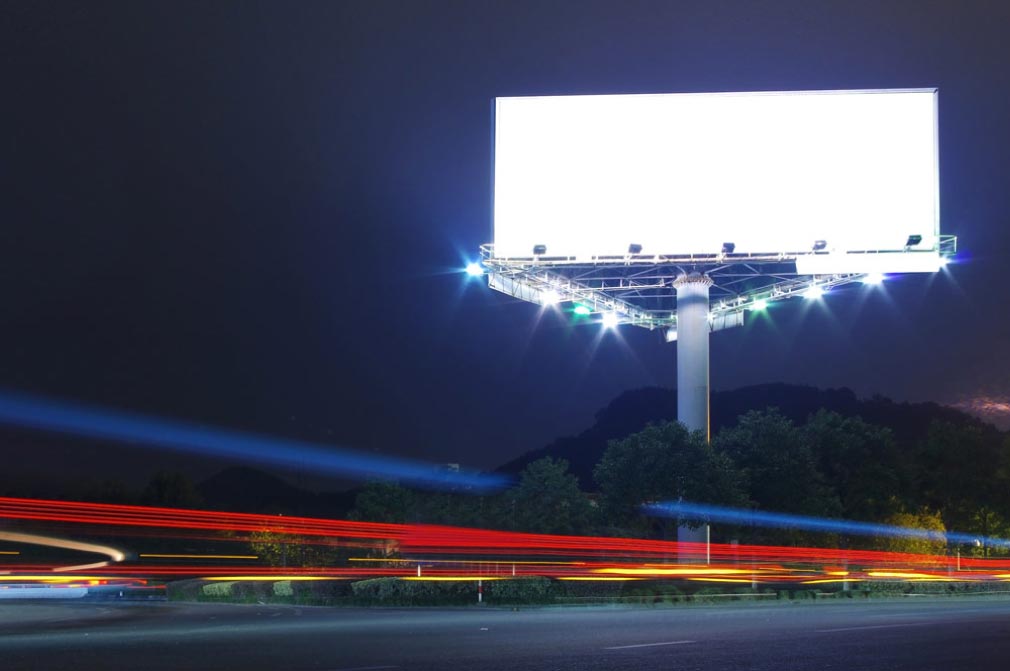
Electronic billboards (a.k.a. electronic message centers, or EMCs) can be up to ten times brighter at night than traditionally lit billboards and can be harmful to the nighttime environment. LED light emitted from EMCs cannot be shielded, so the light floods into the night sky, which wastes energy and contributes to light pollution. Light from EMCs can cause glare and be a dangerous distraction to drivers. In some cases, EMC light can be visible from long distances and may affect the breeding, foraging, and orientation behaviors of nocturnal wildlife.
However, when installed and operated in accordance with DarkSky’s guidance for electronic message centers, EMCs replacing traditionally floodlight-illuminated billboards can actually create a net reduction in sky brightness.
The DarkSky Technical Committee developed EMC Guidelines (PDF) to provide planners, lighting designers, architects, biologists, government officials, and the general public with solutions for EMCs, both on and off premises, that minimize harm to the natural night and even reduce sky brightness when replacing inappropriately lit signs and billboards.
The guidelines …
Adopted January 2019
Reflect Orbital, a planned orbital illumination system, proposes to use in-space mirrors mounted on satellites to reflect sunlight down to Earth at night. The company has described the capability to provide “sunlight on demand” through satellite constellations designed to illuminate areas up to 5 kilometers wide at intensities between 0.8 and 2.3 lux—several times brighter than a full moon. To achieve these levels, multiple satellites would be required for each target area, with illumination lasting only a few minutes as satellites pass overhead. Reflect Orbital has outlined plans for thousands of satellites and is seeking FCC approval to launch its first prototypes in 2026.
Orbital illumination systems represent an unprecedented environmental intervention. Based on current scientific evidence, DarkSky does not see a viable pathway for such systems to align with responsible lighting principles or with our mission to protect natural darkness. These systems would introduce significant ecological, human health, safety, and astronomical risks at a global scale.
DarkSky’s work is guided by the Five Principles of Responsible Outdoor Lighting at Night, which call for lighting that is necessary, targeted, low-level, and well-controlled. Orbital illumination systems fundamentally conflict with these principles.
Given the documented risks, DarkSky opposes Reflect Orbital’s proposed project as currently conceived. Consistent with our position on satellite mega-constellations, we urge the FCC to close longstanding regulatory gaps that allow satellite deployments to proceed without environmental review under the National Environmental Policy Act (NEPA).
We also call on Reflect Orbital to demonstrate leadership by voluntarily commissioning a comprehensive, independent environmental impact assessment conducted by qualified experts—regardless of whether such review is required by the FCC. Technologies with global environmental implications demand transparency and rigorous evaluation before deployment.
We remain committed to scientific dialogue and transparency. The burden of proof rests with the operator to demonstrate that their system will not cause environmental or public harm, and a full, independent assessment is the necessary first step.
Published December 2025
DarkSky and the Illuminating Engineering Society joined forces to prevent and reduce light pollution through the proper application of quality outdoor electric lighting.
As long as Earth has spun on its axis in orbit around the sun, the planet has known night. …
Donations to this page support the Virginia Chapter of DarkSky International!