










DarkSky advances responsible outdoor lighting through policy positions, public education, scientific research, partnerships, and more.
Our desire to light our world at night is not new. We have illuminated our outdoor public places and private realms for centuries. What has changed is that outdoor lighting is now ubiquitous, cheap, and powerful. With it, the world has gotten brighter. A lot brighter.
Lighting brings tremendous benefits to modern society. It has revolutionized the way we live and work outdoors. Modern society requires outdoor light at night for various needs, including safety and commerce.

Establishing lawful requirements for outdoor lighting is an effective way to protect local character, improve visual safety, and reduce the harmful effects of unnecessary and misdirected light.
Created in collaboration with city planners, lighting designers, scientists, and other industry professionals, DarkSky International has developed a set of expert-approved policy templates that provide comprehensive guidance and requirements for outdoor lighting.
We promote a holistic approach to light pollution reduction using the Five Principles for Responsible Outdoor Lighting.
Thoughtful lighting installations limit light to where it is needed, and only in the amounts necessary. This approach eliminates unnecessary lighting and light going up into the sky, and reduces over-lighting, glare, and lighting that spills out past its intended area.
Use light only if it is needed
All light should have a clear purpose. Consider how the use of light will impact the area, including wildlife and their habitats.
Direct light so it falls only where it is needed
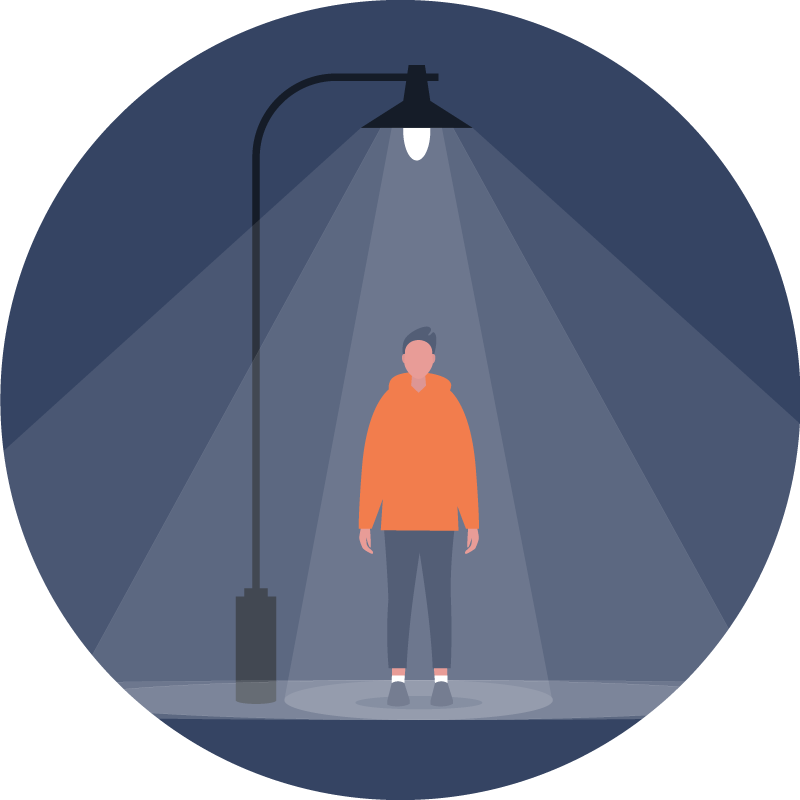
Use shielding and careful aiming to target the direction of the light beam so that it points downward and does not spill beyond where it is needed.
The light should be no brighter than necessary
Use the lowest light level required. Be mindful of surface conditions, as some surfaces may reflect more light into the night sky than intended.
Use light only when it is needed
Use controls such as timers or motion detectors to ensure that light is available when it is needed, dimmed when possible, and turned off when not needed.
Use warmer-color lights where possible
Limit the amount of shorter wavelength (blue-violet) light to the least amount needed.

Our Position Statements take a stance on: satellite mega-constellations; outdoor sports and stadium lighting; lights along the U.S./Mexico border; and more.
In partnership with the University of Arizona’s James E. Rogers College of Law, we have developed a database of statutory regulations and case law regarding outdoor lighting.
Whether you are researching light pollution or advocating for laws in your community, we hope this database will support your work.


DarkSky participates as a stakeholder in many of the professional organizations that establish lighting standards worldwide, including the International Commission on Illumination (CIE) and the Illuminating Engineering Society (IES).
Our advocacy is focused on getting light pollution recognized as a core issue and incorporating the Five Principles for Responsible Outdoor Lighting in all relevant standards.