










How many exterior lights do you have around your home or property? Are you sure? Have you carefully considered each fixture’s need, function, or design? Are you minimizing light pollution coming from your backyard? If not, you’re not alone. Unfortunately, much of our outdoor residential lighting is inefficient, poorly installed, or unnecessary.
You may be unknowingly contributing to light pollution and the disruption of wildlife while wasting energy and costing money. As of 2018, the average American wastes 41 to 103 pounds of carbon dioxide (CO2) annually on excessive residential outdoor lighting alone.1 Across the United States, this amounts to at least $1.4 billion wasted each year, unnecessarily lighting the dark around our homes. Our analysis also indicates that these numbers may grow as Americans are likely consuming more exterior lighting than ever before2.
If we pitch in to improve our lighting at home, we can all help reduce light pollution.
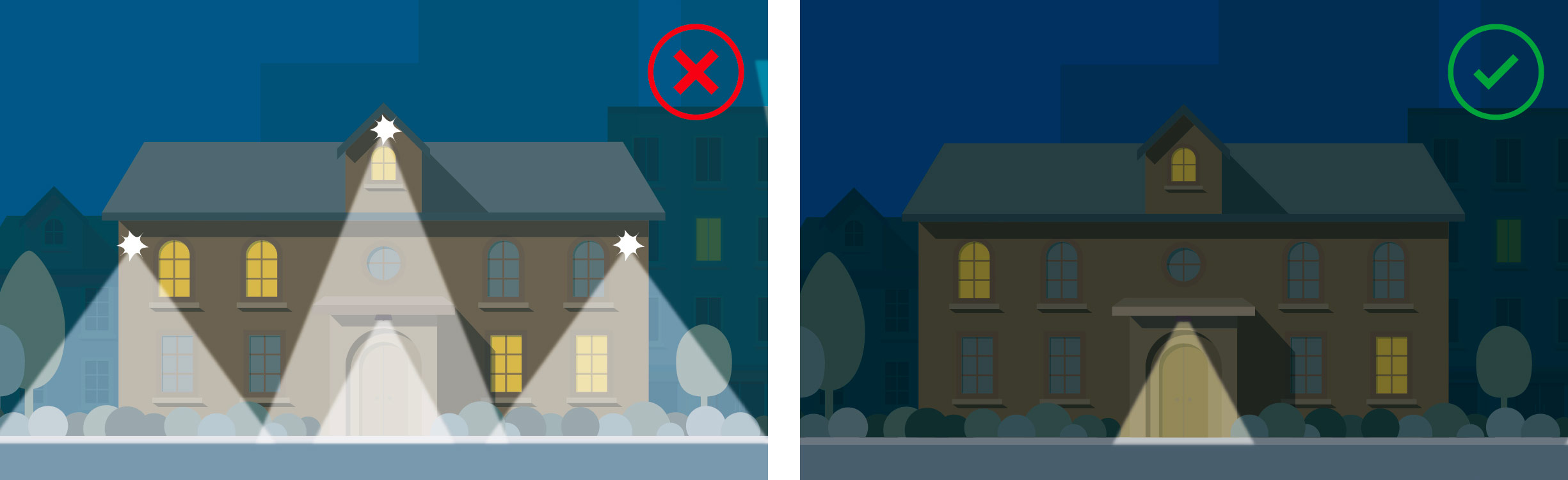
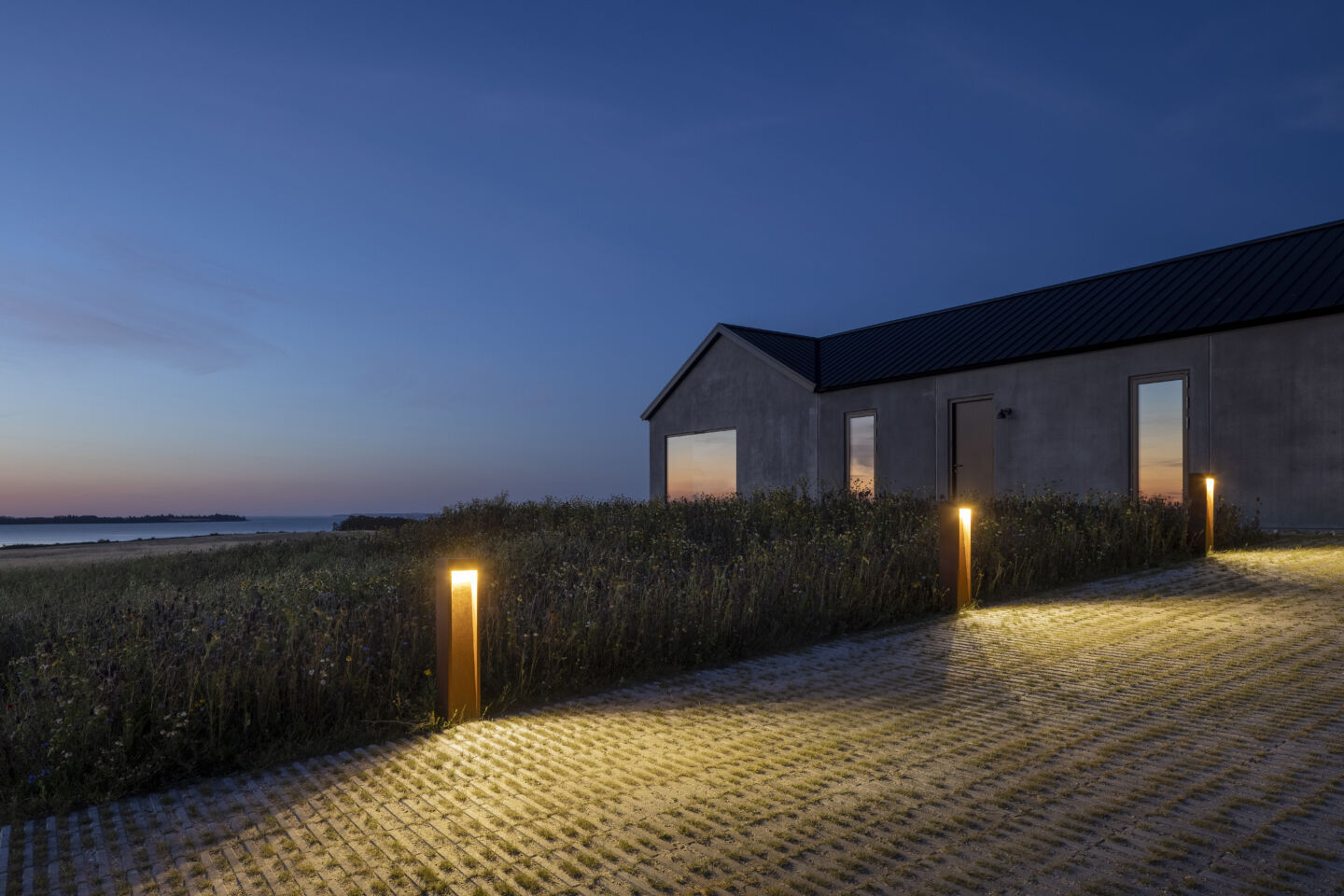
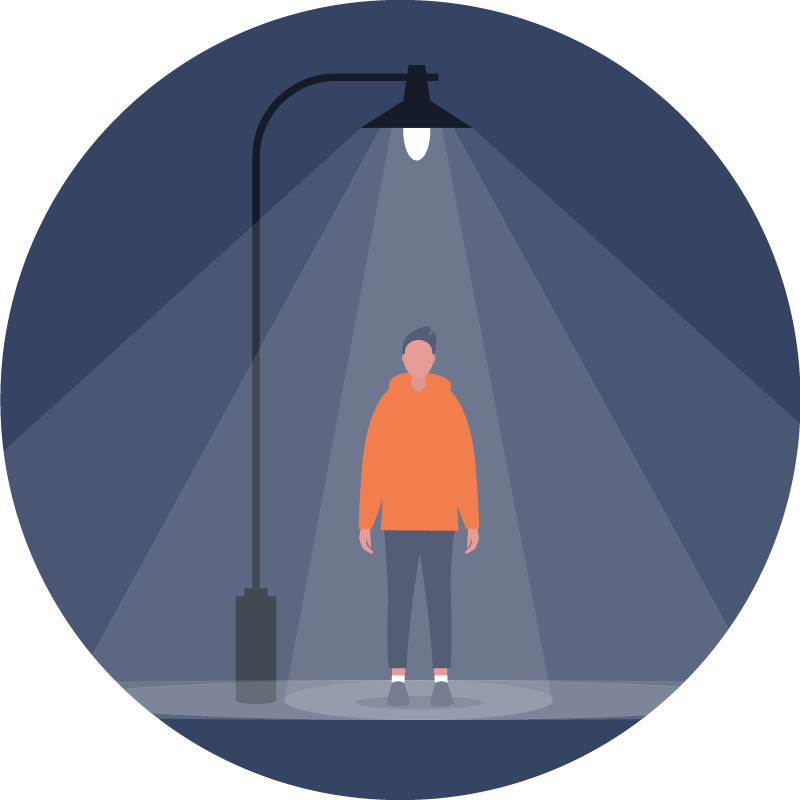
Did you know that 20% to 50% of outdoor residential lighting goes directly into the sky and contributes to light pollution due to poor shielding? You can do your part to reduce light pollution by started in your own backyard (or front porch, walkway, bedroom window, rooftop — anywhere!) With the Five Principles for Responsible Outdoor Lighting, it is possible to reduce light pollution and create a beautiful, healthy, and safe lit environment where you live.
Let’s review the Five Principles for Responsible Outdoor Lighting to see how they apply to your home lighting:
Now that you know the basics, follow this step-by-step guide to conduct an outdoor lighting assessment around your house, apartment building, property line, community center, or wherever appropriate to evaluate the impact of your light on the night. After completing the steps to make your home dark sky friendly, you can download and display a DarkSky Friendly Home Certificate!
So you’ve addressed all your problem lighting, but what about the lighting that is beyond your control? Maybe your neighbor’s lighting shines in your bedroom window, or your landlord or property manager needs to make changes. Check out these tips for working with your neighbor’s lighting.
It’s important that your property is safe and responsibly lit to protect you from potential hazards, support wayfinding, or deter potential crime. But brighter does not equal safer. In fact, too much lighting can have the opposite effect. Learn more about lighting, crime, and safety.
Estimates suggest that on average, street lighting accounts for about 50% of a city’s total light emissions. Learn what you can do about streetlights in your community.
Ready for the next step? Learn what you can do to take action today for a better night tomorrow. The universe will thank you.
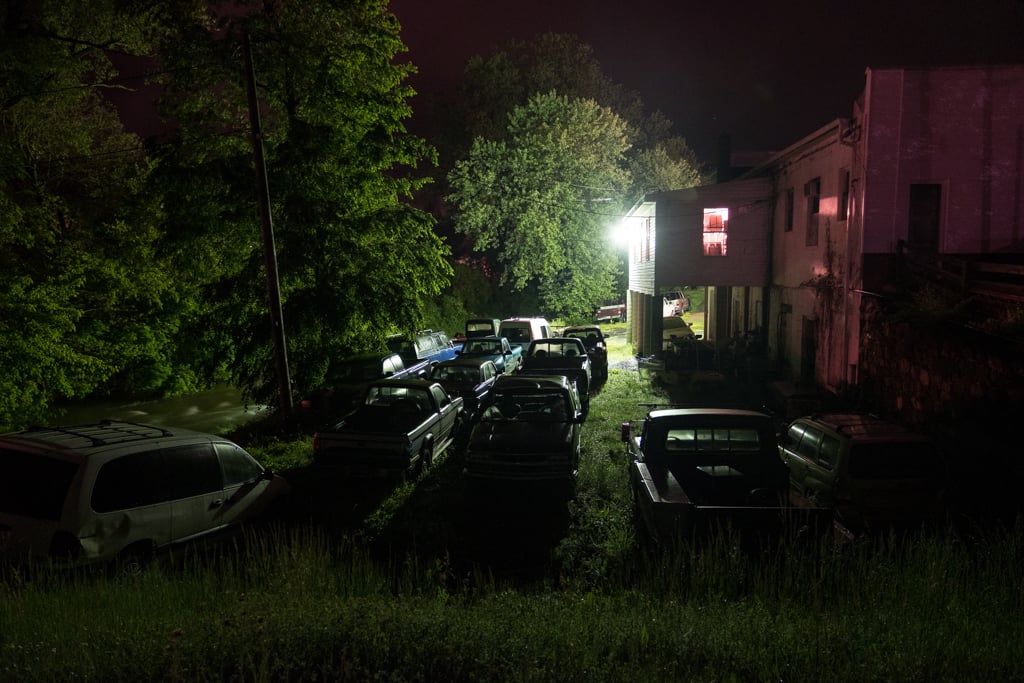
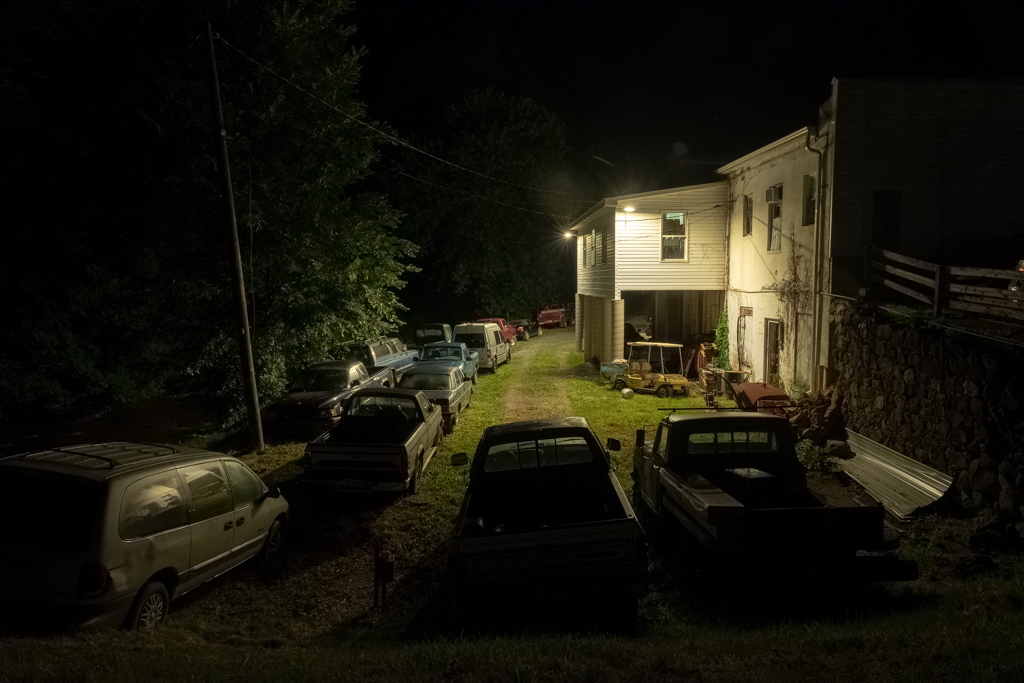
Before (left), after (right): A car repair shop replaced its one unshielded fixture with two dark sky friendly fixtures, minimizing light pollution on surrounding trees and focusing lighting on the ground where it is needed, creating a better lit and safer backyard. (Photo: Joyce Harman)
Did you know? DarkSky works with lighting manufacturers and home retail stores so that you can easily source DarkSky Approved lighting. View DarkSky-certified residential lighting solutions.