









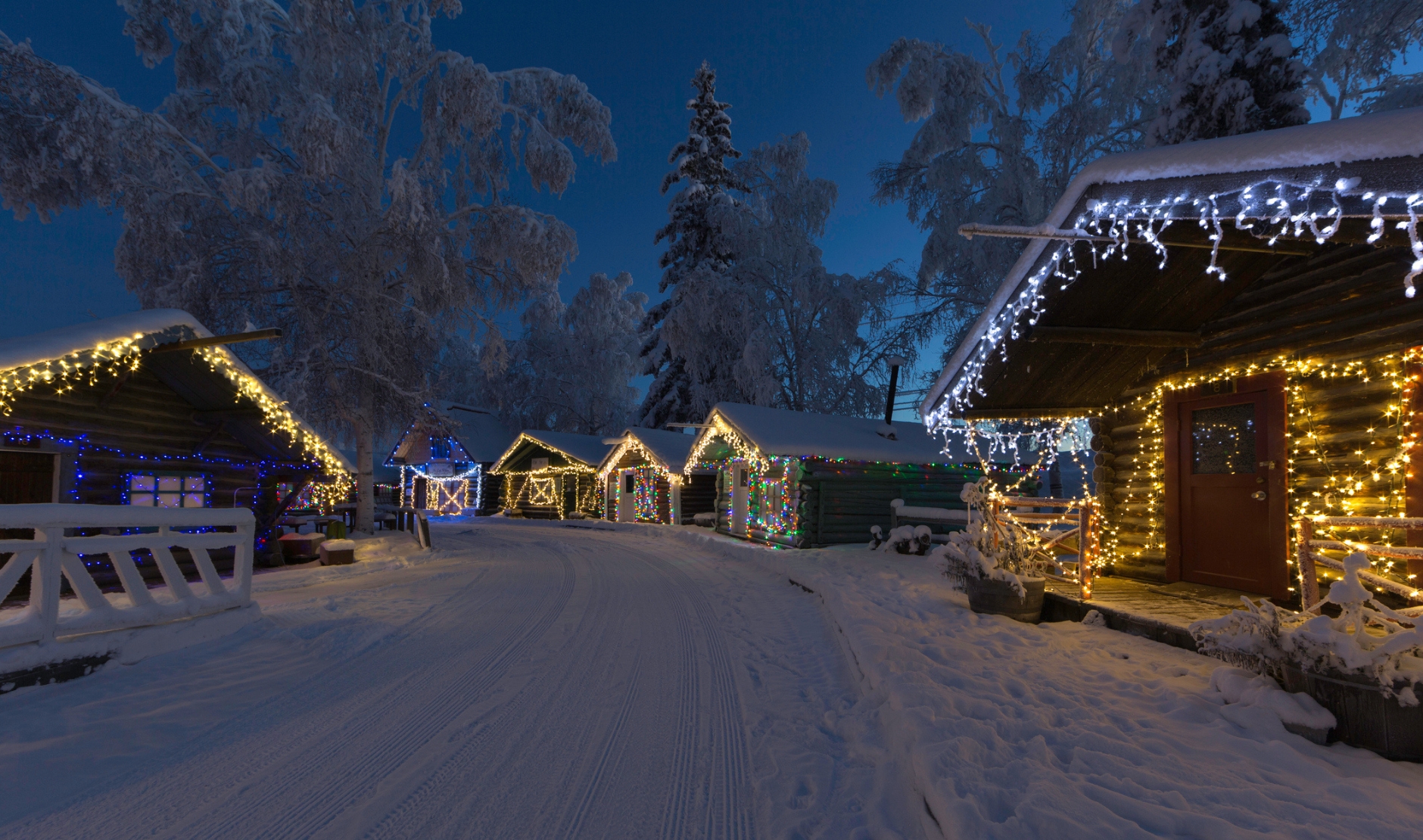
Lights can bring cheer to the festive holiday season, creating a sense of warmth and wonder connected to deep traditions and joyful family memories. However, what feels cheerful to you may not be as delightful to the birds nesting in nearby trees, or your neighbor across the street, impacted by a rogue spotlight.
The good news is that you don’t have to choose between festive celebration and caring for the night. With simple, mindful lighting choices, you can create beautiful seasonal displays that help preserve dark nights while providing holiday cheer.
Dark sky-friendly lighting follows the Five Principles of Responsible Outdoor Lighting at Night, developed by DarkSky International and the Illuminating Engineering Society. These principles state that outdoor lighting should be:
Keeping these ideas in mind will help you decorate joyfully and responsibly, reducing glare that might disturb neighbors and uplighting that contributes to skyglow, which can harm wildlife.
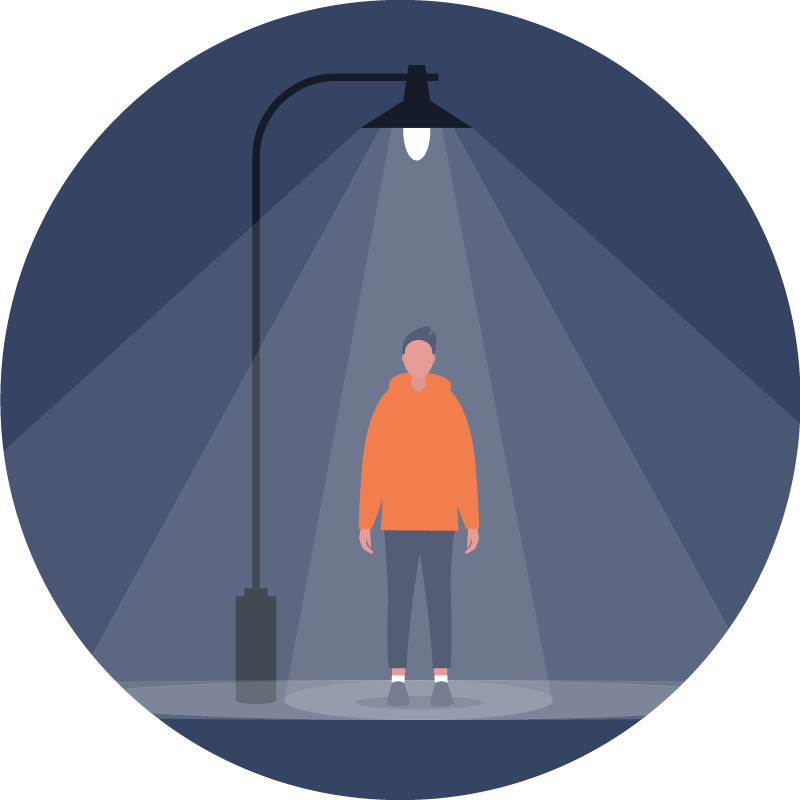
Bright lights used to illuminate yard decorations are often major sources of nuisance lighting. Unshielded or misdirected spotlights can be overly bright, shine past their target, or send light upward. Choose lights that are not too bright, angle them downward, and keep illumination within your property. Doing so often enhances displays rather than washing them out.
String lights along rooflines can also add to sky glow. Cool white or blue LEDs, though efficient, emit short-wavelength light that scatters easily and disrupts circadian rhythms in both humans and wildlife. Opt for string lights with a warm amber glow and consider placing them under eaves to help reduce these impacts.
Even with good placement and color choices, one of the biggest contributors to light pollution is leaving holiday lights on all night when no one is outside to enjoy them. Wildlife, however, still experiences the glow and may not be so cheery about it.
The simplest, least expensive, and most impactful thing you can do this year is turn lights off at a reasonable hour. Using a timer to ensure consistency is one of the easiest and most effective steps anyone can take.
Artificial light affects many species worldwide, especially during winter when nights are long, making the search for food and shelter more challenging.
Creating a festive display that helps protect the night can be simple. Here are our Five Principles for Responsible Outdoor Lighting, adapted with holiday decorating in mind:
Useful – The purpose is holiday cheer, so keep outdoor lights on only when and where they can be enjoyed.
Targeted – Direct holiday lighting downward so it shines on the decoration you want to highlight and not beyond your property line.
Low level – Holiday lighting should be no brighter than needed, preventing glare and nuisance lighting.
Controlled by timers or sensors – Use timers to ensure you don’t forget to turn off the lights at a respectful hour each night.
Warm colored – Choose warm or amber-toned lights and avoid blue-white wavelengths to reduce sky glow and nighttime disruption.
Responsibly choosing outdoor lighting does not end after the holiday season. Learn how your home can help protect the night year-round by exploring our Home Outdoor Lighting Assessment activity and making your space dark sky-friendly all year long.