










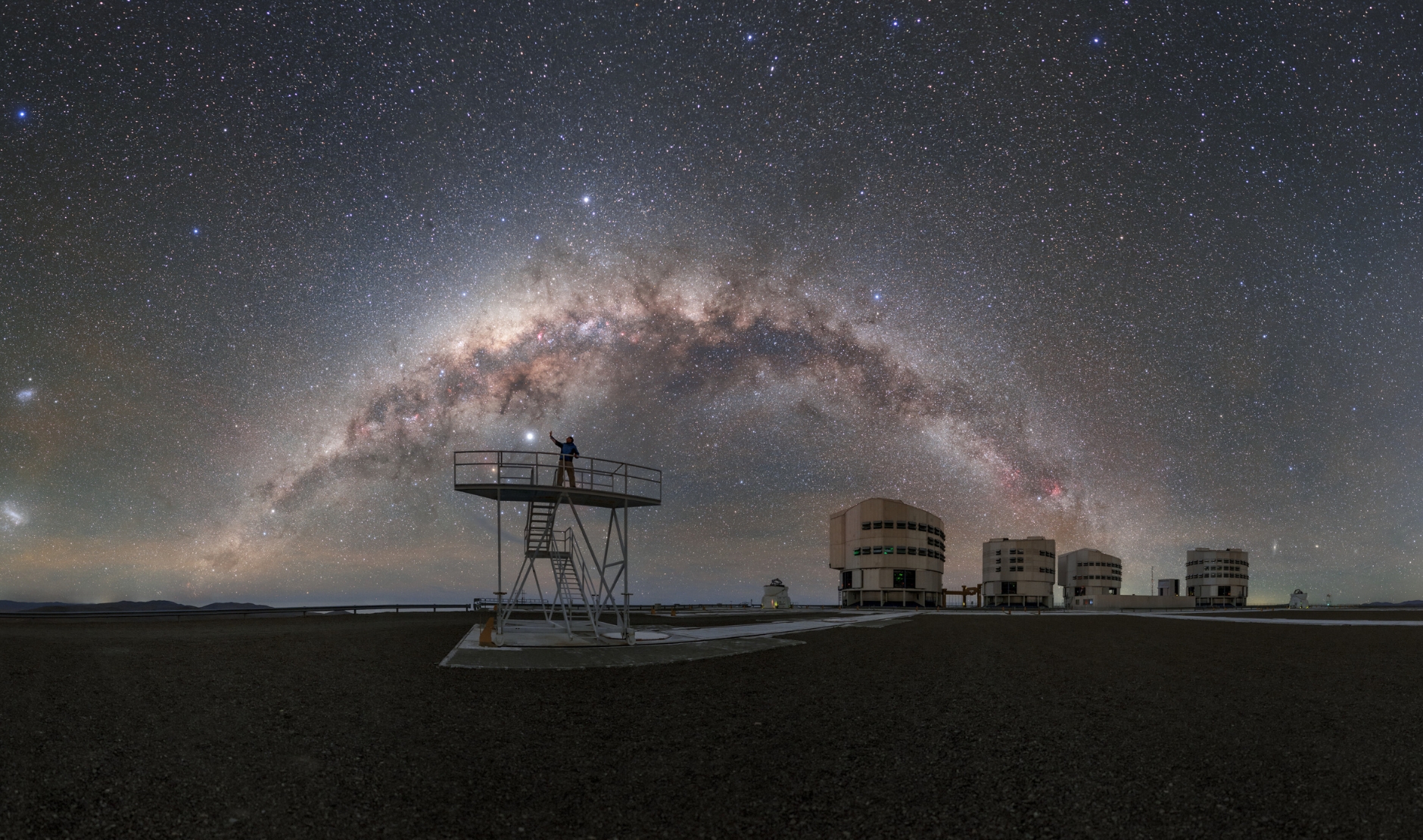
Dark skies over northern Chile’s Atacama Desert, one of the darkest places on Earth, recently secured a tentative win.
After months of public concern, scientific scrutiny, and civic engagement, the company behind Proyecto INNA, a large-scale industrial energy project proposed near some of the world’s most important astronomical observatories, withdrew their proposal. Early plans placed the sprawling 3,000-hectare development just kilometers from sites such as the European Southern Observatory’s Paranal Observatory, raising serious concerns about potential impacts on sky quality. While Chilean advocates are awaiting final confirmation of the decision, they are cautiously optimistic that their sustained efforts have helped secure this outcome.
For astronomers, environmental advocates, Indigenous communities, and citizens across Chile, as well as the global scientific community that depends on these skies, the news of withdrawal brought significant relief and renewed hope for protecting a rapidly diminishing resource.
What began as a local concern raised through Chile’s environmental review process quickly grew into a national conversation about land use, environmental responsibility, and Chile’s role as a global steward of the night sky. The issue even reached Chile’s presidential debate stage, where both leading candidates were asked on live national television to address the project and the future of the country’s skies.

At the center of this effort was Fundación Cielos de Chile, led by executive director Daniela González, who worked closely with a broad coalition of organizations. Reflecting on the campaign, González emphasized that its success stemmed from deliberate choices around framing, collaboration, and persistence — an approach she sees as a hopeful model for addressing future light pollution challenges worldwide.
In conversation with González, we captured her insights to share with our community.
One of the earliest realizations advocates made was that the issue could not be framed as an astronomy-only concern. While the project’s proximity to major observatories raised immediate red flags, Fundación Cielos de Chile understood that light pollution would affect far more than telescopes alone, reaching ecosystems, cultural landscapes, and communities across the region.
“The consequences for astronomy could have been catastrophic,” González noted. “But we knew this wasn’t only an astronomy problem.”
From the outset, the foundation worked to broaden the conversation so the issue resonated beyond the scientific community. That meant building partnerships with a wide range of groups, organizations, and communities, including environmental organizations, local residents, Indigenous communities, and others with a stake in the night sky.
At the same time, advocates emphasized Chile’s global importance for astronomy. It was critical, González explained, to show that this was a global concern, not just a local one.
By connecting science, environment, culture, and economics, advocates helped people see the night sky as a shared and consequential resource. This broader framing unified diverse stakeholders around a simple understanding: the project’s impacts would be widely felt, and protecting the night served the greater public interest.
Another key strategy was how advocates positioned their response to the project itself.
Rather than opposing the proposal outright, Fundación Cielos de Chile focused on advocating for changes. Their message remained clear and consistent: green energy and development matters, but this project, in this location, raised serious concerns that required closer scrutiny.
By engaging directly through Chile’s Environmental Assessment System and emphasizing improvements and alternatives, advocates avoided being dismissed as anti-development. They repeatedly underscored that Chile’s desert holds significant renewable energy potential, but not every site is appropriate for large-scale industrial infrastructure.
“We were never saying no,” González explained. “We were saying yes to renewable energy — just not at the expense of irreplaceable skies.”
This approach kept the conversation focused on planning, responsibility, and territorial balance, while allowing decision-makers to reconsider the project’s viability in that location. Ultimately, that reassessment led to the project being withdrawn from the area altogether.
As advocates worked deliberately to move the issue beyond technical review processes and into broader public view, a central challenge remained: many people still do not understand how vulnerable dark skies are, or how quickly they can be degraded by poorly planned lighting.
“A lot of people were not aware of how serious the impacts could be,” González said. “Once the information was clear, people wanted to get involved.”
Education became a cornerstone of the campaign, translating technical concerns into accessible, public-facing messages. Advocates provided clear information and practical guidance on how individuals and organizations could participate in the environmental review process.
During the public participation phase, more than 700 formal citizen observations were submitted — an unprecedented level of engagement that included scientists, local residents, Indigenous representatives, and concerned citizens.
Partnerships with organizations like DarkSky International helped expand awareness beyond Chile, using global advocacy and outreach to underscore why decisions affecting the country’s skies matter worldwide. As attention grew, the issue reached national media, Congress, government ministries, and ultimately the presidential campaign.
“That showed us the issue had reached a national level,” González said. “It was no longer something only experts were talking about, but everyone.”
The significance of the project’s withdrawal extends far beyond the Atacama Desert. Chile’s experience shows that dark skies can be protected when local groups organize early, build broad coalitions, and stay engaged throughout the process.
In a world where dark skies continue to disappear, this outcome matters. It is a reminder that coordinated advocacy works, and that meaningful protection remains possible when people and communities come together.
Want to learn more about dark sky protection efforts around the world? Join our Advocate network and connect with a growing global community working to protect the night.