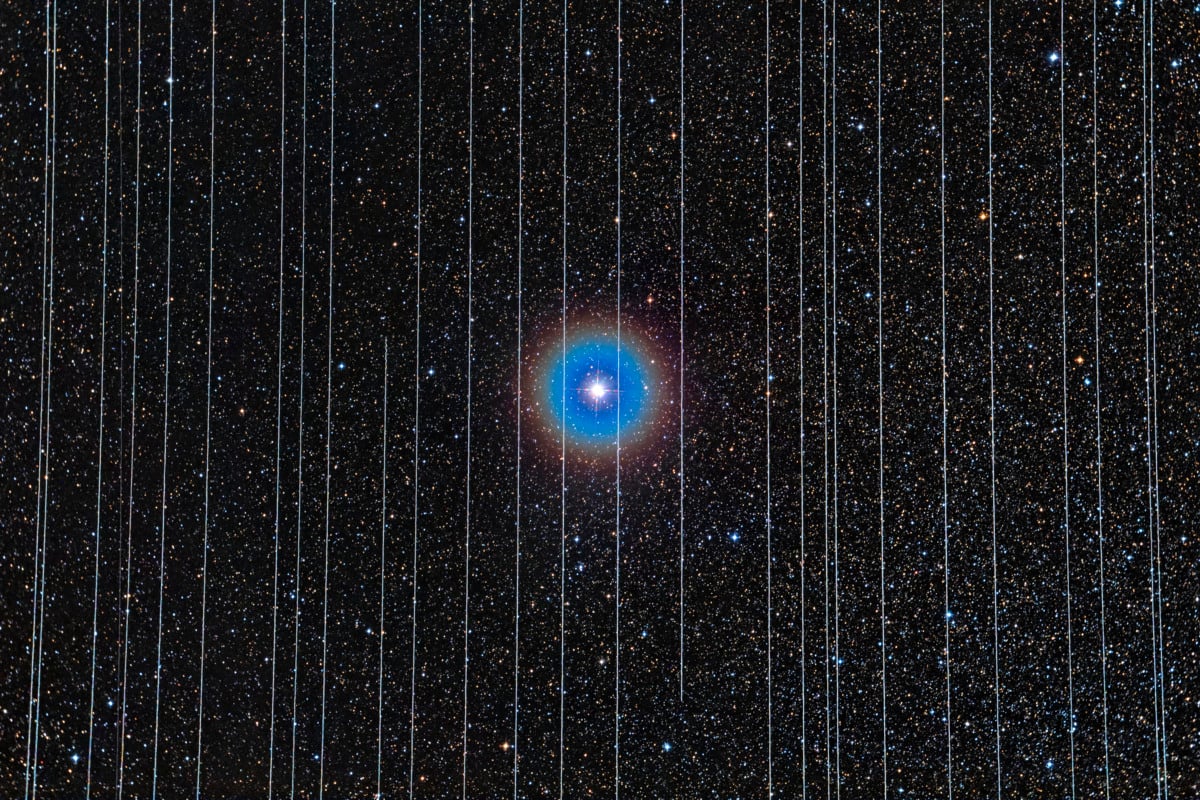











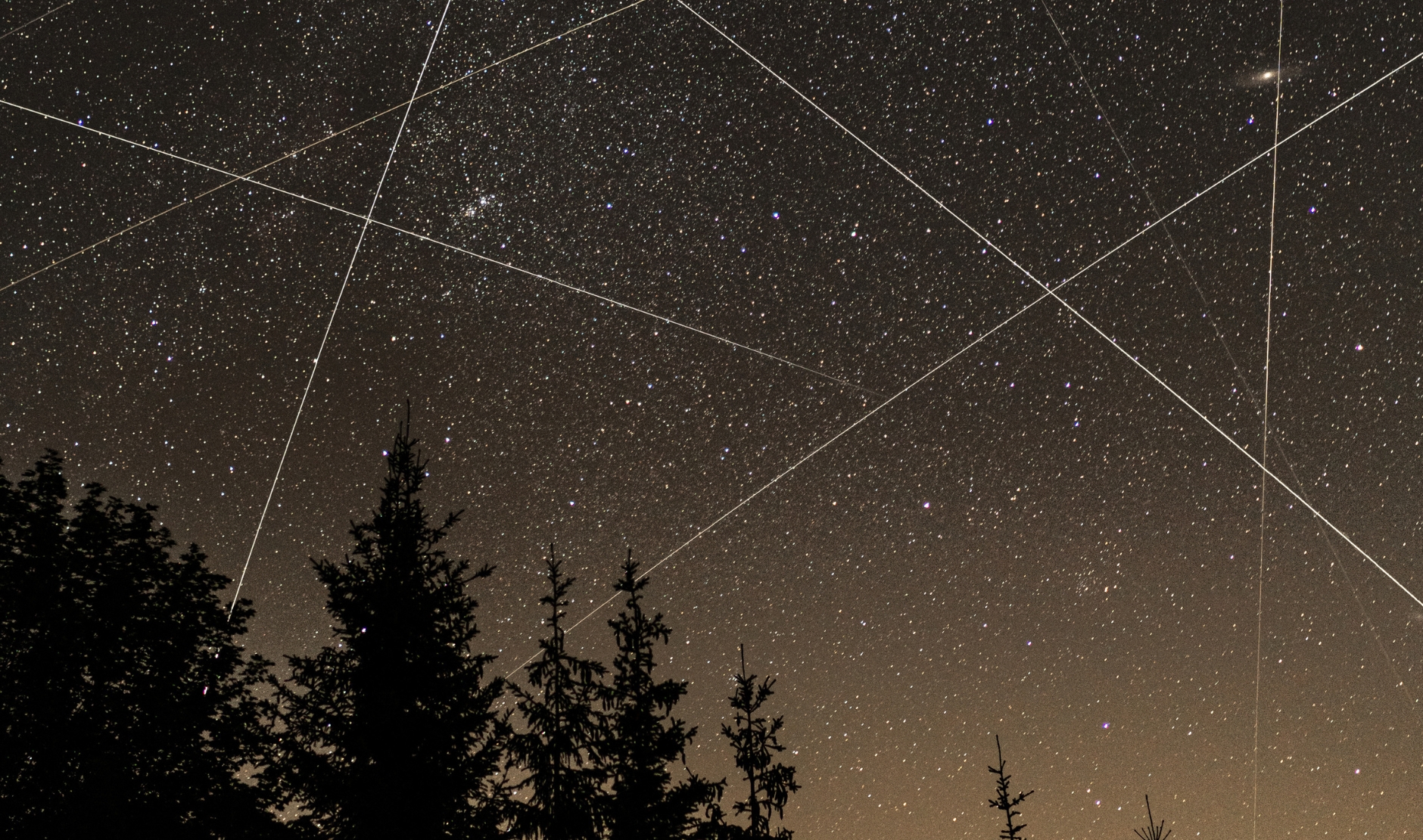
In the United States, the Federal Communications Commission (FCC), the agency responsible for authorizing satellite launches and operations, recently reviewed two proposals of unprecedented scale and consequence. If approved, they would alter the night sky as we know it, with impacts that would be increasingly difficult, if not impossible, to reverse.
Both proposals received an extraordinary number of public comments during the FCC review process. While the formal comment periods have now closed, DarkSky is continuing its advocacy through a new effort, open letters to both SpaceX and Reflect Orbital opposing the projects in their current form and calling for a clear, comprehensive environmental review before any launches proceed.
DarkSky International is urging the public to take action by signing two open letters calling for greater oversight and environmental review before these projects move forward.
By signing these open letters, you can help urge both companies to pause these projects in their current form and commit to a full environmental review before any launches proceed.
The first proposal comes from Reflect Orbital, which plans to deploy satellites fitted with in-space mirrors to beam reflected sunlight back to Earth at night. Marketed as “sunlight on demand,” the company says the system could extend daylight for solar farms or be sold to cities to illuminate streets at brightness levels exceeding three times that of the full moon.
Such illumination would introduce an entirely new source of artificial light at night, with far-reaching consequences, including disruption to wildlife and ecosystems that depend on natural cycles of light and dark, as well as serious public safety concerns.
The second proposal is even more striking in its scale. SpaceX has asked the FCC for permission to launch up to one million satellites, described in its filing as orbital data centers, as part of an expansion of its artificial intelligence infrastructure.
To put that number in perspective, there are currently about 14,500 active satellites in low Earth orbit. Approving the request would increase that figure by nearly 70 times. Once deployment begins at that scale, potentially involving thousands of launches each year, the effects on the night sky, orbital congestion, and the broader environment would be extraordinarily difficult to reverse. Proposals of this magnitude warrant rigorous scrutiny, transparency, and meaningful public input before any approval is considered.
DarkSky does not oppose satellite technology. Satellites play an important role in modern life. But the organization does oppose unchecked expansion without oversight and full environmental review, particularly when technologies pose real and lasting risks to the global nighttime environment.
In alignment with the five principles of responsible outdoor lighting that guide DarkSky’s programs and initiatives, and consistent with our position on satellite megaconstellations, we believe proposals of this magnitude require a fundamentally higher level of scrutiny.
Current regulatory frameworks were not designed to evaluate the cumulative environmental impacts of systems operating at this scale. The effects on the night sky, astronomical research, wildlife, and the broader nighttime environment demand careful study before deployment.
Until adequate testing and environmental review are completed, both proposals should be reconsidered in their current form.
Although the FCC comment periods have closed, there is still an important opportunity for the public to weigh in.
DarkSky International has composed open letters addressed to both SpaceX and Reflect Orbital urging the companies to pause these proposals and commit to a full environmental review before any deployment proceeds.
By signing and sharing these letters, you can help demonstrate that protecting the night sky remains a priority for communities, scientists, and people around the world.
Sign the open letters:
Your voice can help ensure that decisions about the future of the night sky are made with the transparency, research, and responsibility they require.

As long as Earth has spun on its axis in orbit around the sun, the planet has known night. …