










Late last month, SpaceX filed a request with the U.S. Federal Communications Commission (FCC) seeking authorization for a new satellite constellation. Not hundreds of satellites. Not thousands. One million.
The proposal would deploy a vast network of AI data centers directly into low Earth orbit. This move would increase the number of satellites in the sky by nearly 70 times, representing the largest expansion of orbital infrastructure in history. Without meaningful oversight, this project could permanently alter the night sky as we know it.
Add your name to DarkSky’s open letter calling on SpaceX to conduct a full environmental review, commit to satellite invisibility standards, and engage with the scientific community before deploying a satellite constellation of this scale.
To understand why this filing matters, it helps to understand what’s being proposed and why.
Artificial intelligence systems are extraordinarily energy-hungry. The data centers that power modern AI require massive amounts of electricity, creating both an energy challenge and a land-use problem. SpaceX’s concept is to move some of that computing infrastructure into space, where satellites could operate using solar energy in orbit.
While the concept may be innovative, the scale of this proposal brings serious consequences for the night sky and raises significant environmental concerns.
Today, there are tens of thousands of satellites orbiting Earth — already a historic high, and already generating measurable impacts on the night sky. A constellation of one million satellites would dwarf everything currently in orbit by orders of magnitude.
This is not an incremental step forward. It is a fundamental transformation of Earth’s orbital environment, proposed without a comprehensive environmental review.
DarkSky International has documented the growing impact of satellite constellations on the night sky for years. Even at today’s scale, the effects are real and measurable.
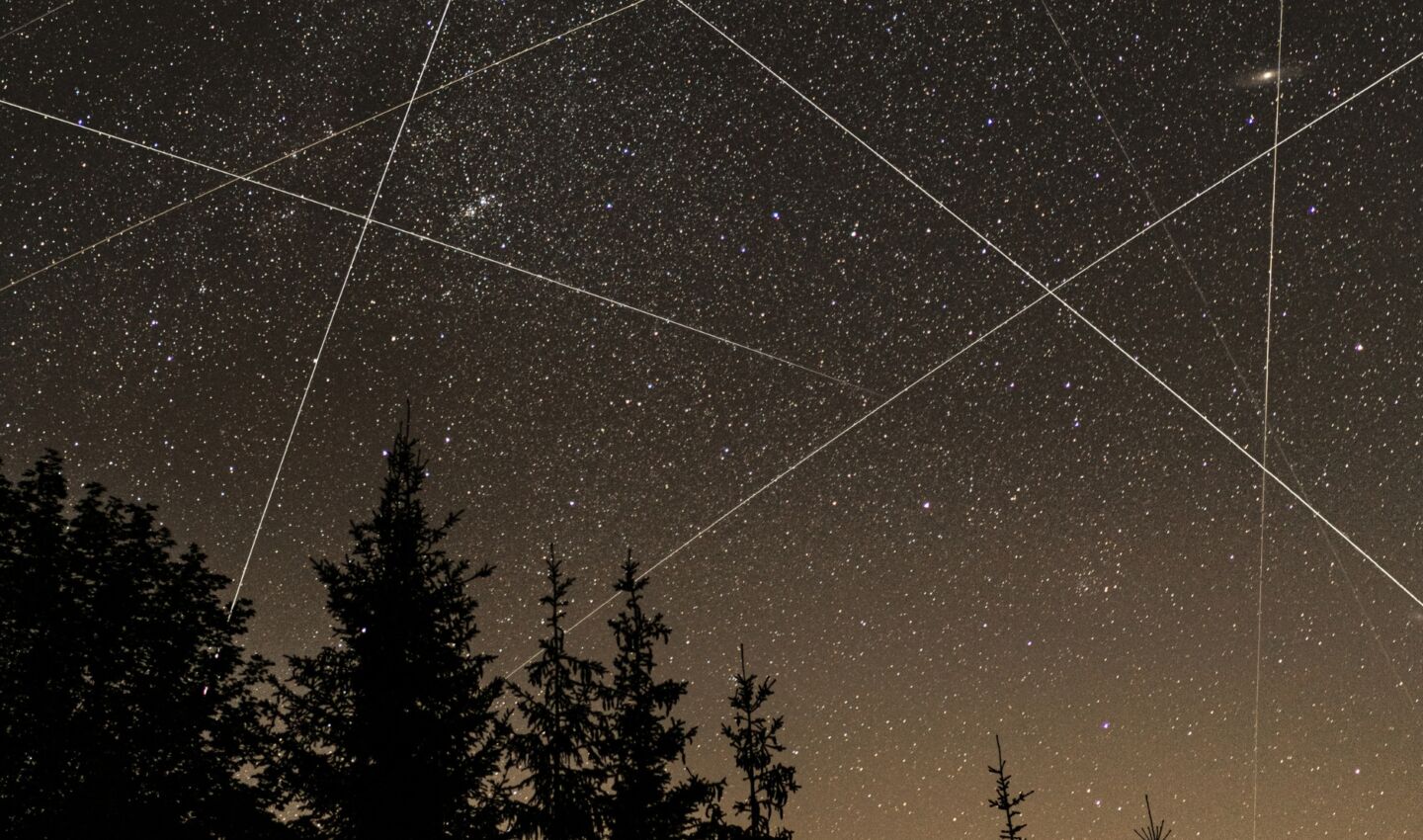
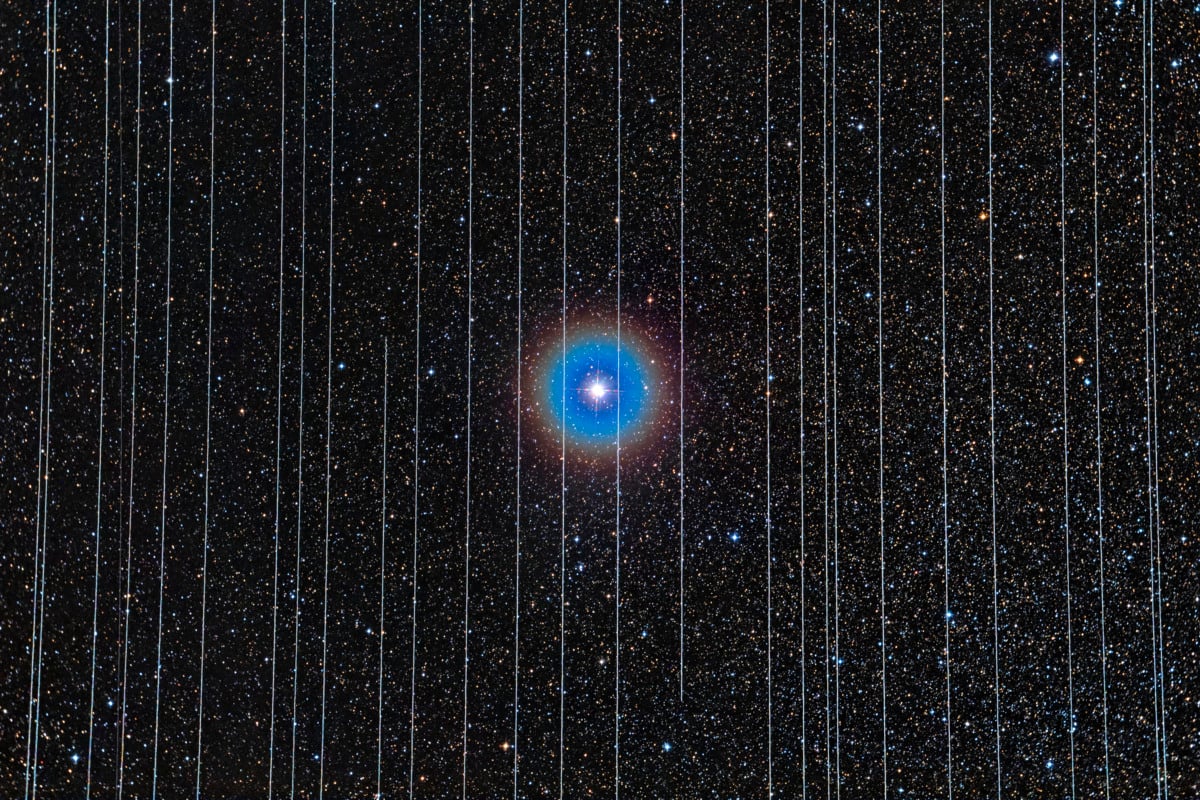
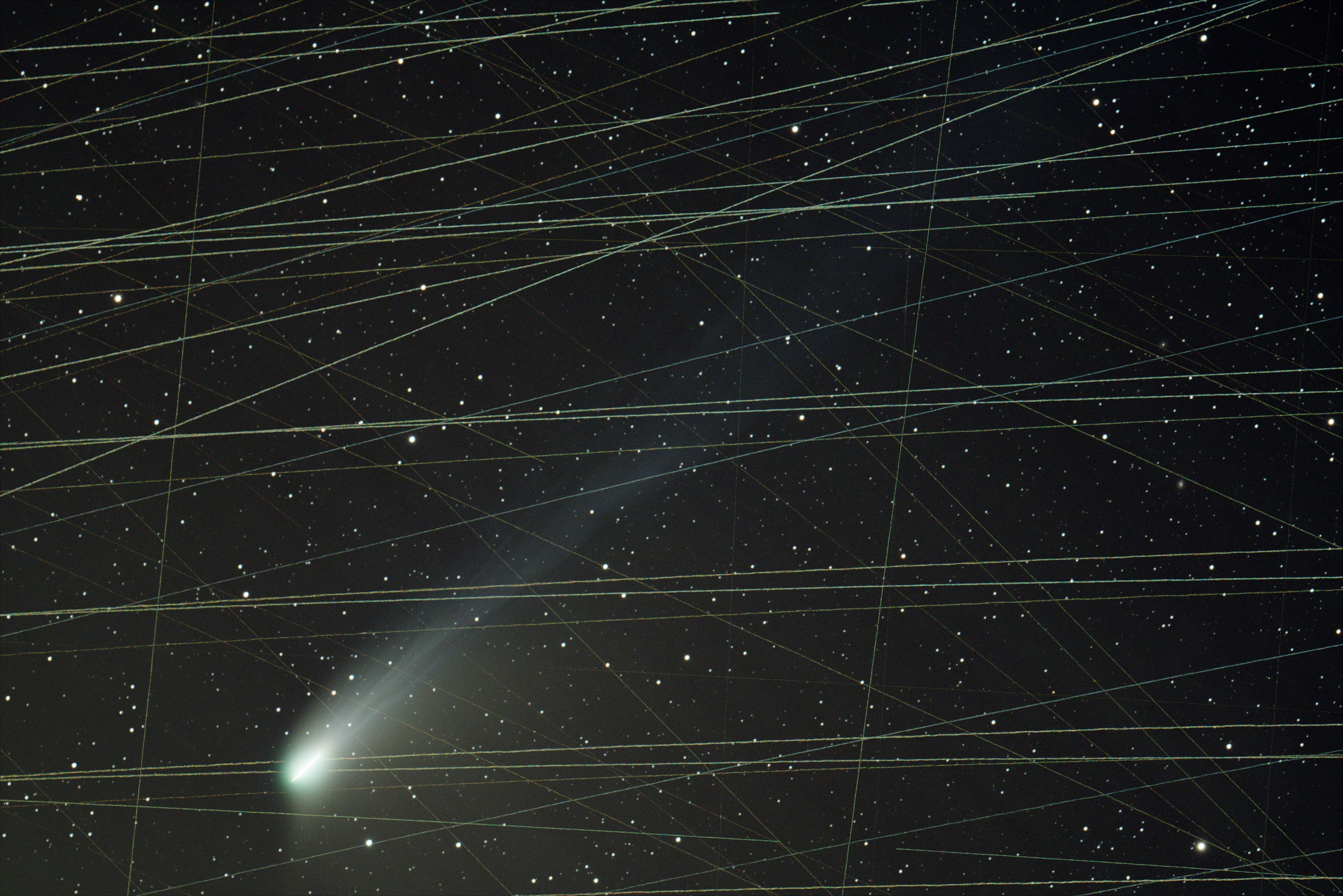
Astronomical images regularly capture bright streaks where satellites cross the frame. Trains of newly launched satellites are often visible to the naked eye shortly after deployment, and these events would become far more frequent as large constellations are launched and maintained. Even once in orbit, satellites create a constant movement across the sky, particularly visible after sunset and before sunrise, when sunlight reflects off their surfaces. Researchers are also documenting something more diffuse and concerning: a gradual brightening of the night sky as tens of thousands of satellites scatter sunlight back toward Earth.
This is not just an inconvenience for astronomers and astrophotographers. It affects anyone who looks up: stargazers, dark sky places that depend on astrotourism, and cultural communities whose traditional knowledge and practices are tied to a visible night sky, among others. But the impacts extend far beyond people.
Countless species depend on darkness to survive. Sea turtles, migratory birds, and many other animals rely on natural light cues from the night sky. Nocturnal insects, already under severe pressure globally, are highly sensitive to even modest increases in sky brightness. For example, studies show that small increases in artificial light can significantly reduce moth populations, with cascading consequences for larger ecosystems.
At the scale of one million satellites, these impacts would not simply increase. They would compound. Researchers warn that constellations of this size could contribute to increased diffuse glow across the night sky, making faint stars difficult or impossible to see even from the darkest places remaining on Earth. In places where only the brightest stars are visible during parts of the night, satellites could easily outnumber the stars themselves.
We want to be clear about our position. DarkSky International is not opposed to satellites or to innovative approaches and new technologies. We recognize that the world today relies on satellites orbiting overhead, and that reliance will accelerate in the future.
What we are saying is that proposals at this scale require a fundamentally different level of scrutiny than what has applied to satellite constellations in the past.
The FCC’s existing framework for satellite licensing was not designed to evaluate the cumulative environmental impacts of a million-object system. The questions this proposal raises — about atmospheric chemistry from launch and reentry emissions, about orbital congestion and the long-term risk of collision cascades, about the measurable brightening of the sky — deserve rigorous, independent scientific review before this system moves forward.
Through our open letter to SpaceX, DarkSky International is calling on the company to make three commitments before this constellation proceeds.
The goal of “darkening” satellites is no longer sufficient at this scale. Despite mitigation efforts, the current Starlink constellation has yet to consistently meet the visibility threshold of magnitude 6. At one million satellites, even dim objects could produce a cumulative skyglow that erases the stars for the unaided eye and disrupts the biological rhythms of nocturnal wildlife globally. SpaceX should commit to an engineering standard ensuring the entire constellation remains invisible to the unaided observer — fainter than magnitude 6 — during all phases of operation.
Innovation must not outpace our understanding of its consequences. The cumulative impacts of this proposal — atmospheric pollution from constant launches and re-entries, the heightened risk of collision cascades — are systemic and potentially irreversible. We call for a comprehensive, independent environmental review consistent with NEPA standards, and we ask that all further expansion toward a million-satellite architecture be paused until those assessments are complete.
The night sky is a shared global heritage. We invite SpaceX to engage in structured, multi-stakeholder dialogue with DarkSky and the astronomical community to evaluate whether such a system can proceed without unacceptable harm to the global nighttime environment — grounding decisions in independent science rather than corporate speed alone.
We’re asking for that collaboration to be built into this proposal from the ground up — not retrofitted after deployment is already underway.
The FCC’s public comment period is closing soon, but our advocacy does not end there. That’s exactly why the open letter matters.
The open letter keeps the pressure on SpaceX directly, beyond any single comment period, urging the company to commit to true satellite invisibility standards, conduct a comprehensive environmental review before further expansion, and engage in transparent, science-based dialogue with the astronomical and environmental communities.
We’re asking everyone in the DarkSky community, and everyone who cares about the night sky and the nighttime environment, to add their name now. Tell SpaceX that the night sky belongs to everyone, and that decisions of this magnitude must be made with accountability to the people and the planet they affect.