










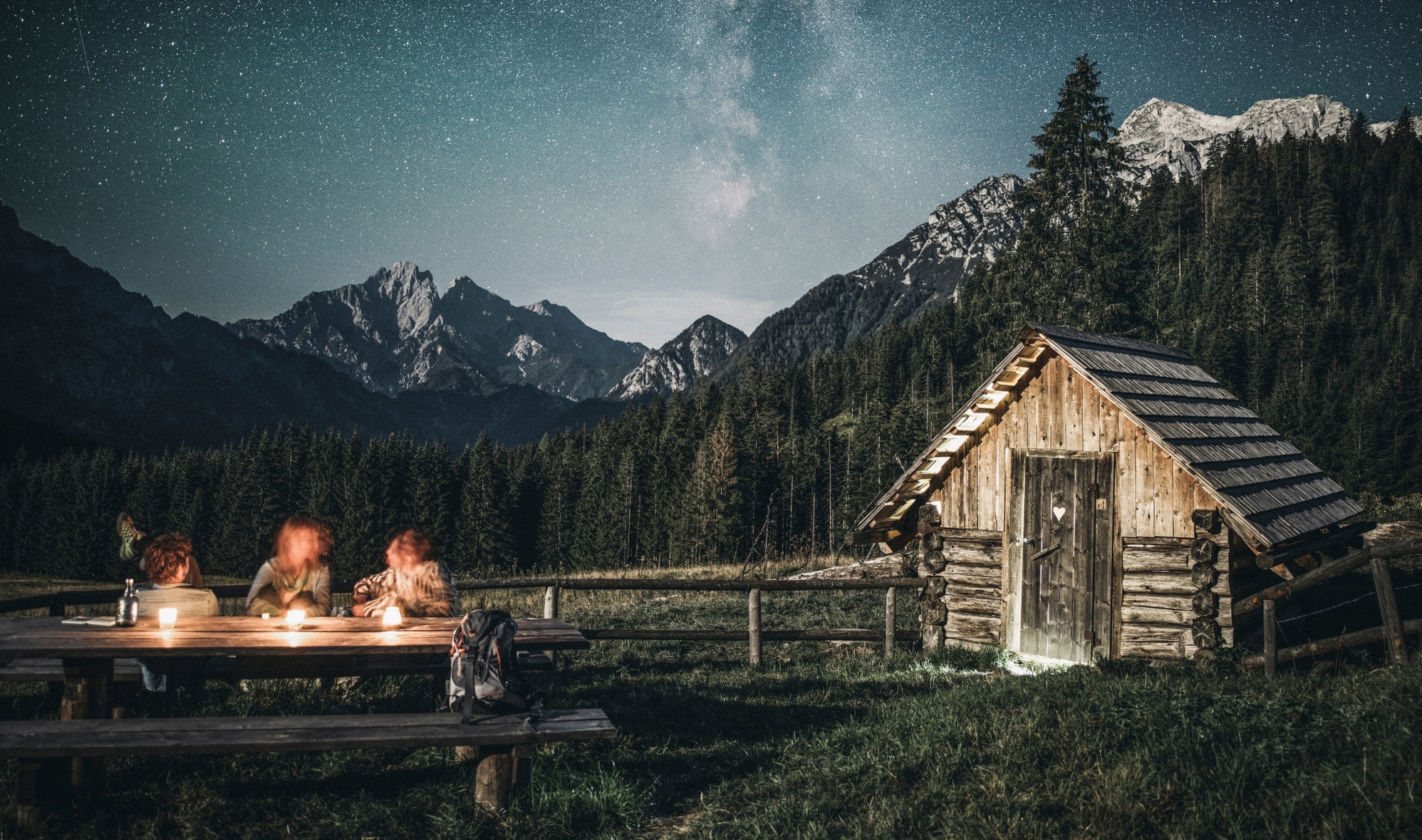
St. Gallen, Austria
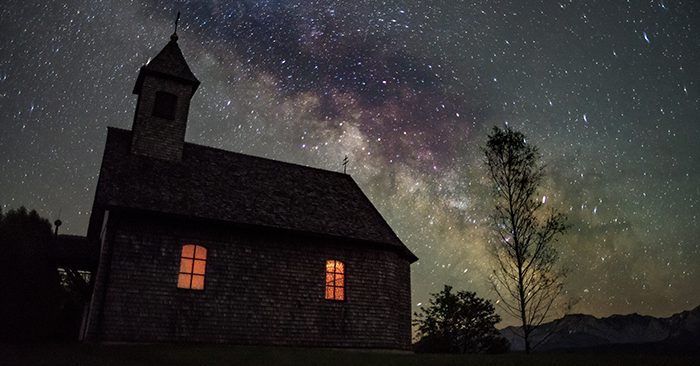
Located in the Alpine heart of Austria, the Dark Sky Reserve Eisenwurzen is a vast and wildly romantic landscape of gorges, free-flowing rivers, and remote valleys where ancient beech forests and rugged alpine peaks meet an exceptional night sky. The region’s geography is defined by steep limestone formations, canyons, and high mountain ridges that shape both its ecological richness and its extraordinary dark skies. Natural beauty and wilderness dominate the environmental setting, offering habitats for rare species and providing one of Central Europe’s most intact nocturnal landscapes.
The Dark Sky Reserve Eisenwurzen spans 2,498 km² across Lower Austria, Upper Austria, and Styria and forms an exceptional network of protected landscapes with a core zone of 975.67 km². It includes a UNESCO World Heritage Site, a UNESCO Global Geopark, wilderness areas, national parks, and nature parks, creating an interconnected ecological system of forests, rivers, and mountains. These landscapes host some of the oldest living trees in the Alps and represent Europe’s most valuable relict forest ecosystems. More than 1,600 butterfly species have been documented, reflecting the region’s outstanding biodiversity, while species such as the White-backed Woodpecker, Ural Owl, Golden Eagle, Rosalia Longhorn Beetle, lynx, peregrine falcon, otter, and black stork have successfully returned and now thrive within this environment, depending on intact ecosystems and the protection of natural night conditions within the reserve’s safeguarded nightscape.
The designation of the Dark Sky Reserve marked a major milestone in protecting natural nightscapes and biodiversity. Twenty municipalities fully support the initiative and have adopted a comprehensive Lighting Management Plan that guides outdoor lighting design and retrofits street lamps with adapted lighting solutions and blue-light filters where full upgrades were not feasible. Municipal council resolutions formalized this regional commitment, reflecting a shared understanding that reducing light pollution benefits ecosystems, human well-being, and sustainable tourism. Night sky quality surveys and monitoring programs document the exceptional darkness of the reserve, providing scientific evidence of its value as one of Europe’s premier dark-sky regions. Educational outreach, public workshops, and astronomical programs further promote awareness of light pollution and the importance of night-time environmental stewardship.
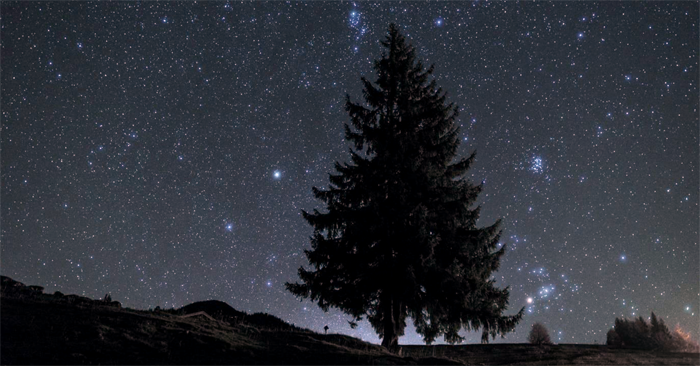
Comprehensive night-sky measurements and lighting retrofits enabled certification of the Dark Sky Reserve. Satellite and ecological analysis defined a core zone with over 95% no detectable artificial light and strong ecological protection. Continuous monitoring records sky brightness values of 21.2–21.88 mag/arcsec²—among Central Europe’s darkest—with the Milky Way visible to the naked eye and minimal light domes due to natural mountain shielding. Nine permanent stations and mobile sensors provide ongoing data integrated into national frameworks, while fully documented lighting retrofits demonstrate compliance with dark-sky standards and measurable protection of night conditions.
The reserve remains open to visitors, and access is free. Seasonal events and guided programs, including astrophotography workshops, “Sounds of the Dark” night experiences, and the special meteor-shower train ride. They offer structured opportunities to experience the region’s nocturnal biodiversity and its star-filled skies in accordance with dark-sky principles. Guests are encouraged to explore responsibly and respect environmental and lighting guidelines. Research and public engagement are supported by two astronomical observatories, a mobile telescope program, and educational initiatives that deepen understanding of the night sky and its ecological significance. These activities provide an unforgettable connection to nature and the cosmos while promoting sustainable tourism and the long-term conservation of the region’s exceptional dark skies and biodiversity.
The long-term vision of the Eisenwurzen Dark Sky Reserve is to preserve natural nightscapes while fostering scientific inquiry, community well-being, and sustainable tourism. The management plan defines measurable objectives, including: Continued reduction of artificial light emissions, integration of nocturnal ecology into conservation management, development of educational and ecotourism infrastructure, permanent research cooperation with national and international institutions, regular reporting, stakeholder engagement, and adaptive management ensure the reserve’s sustainability
beyond the initial designation phase. The Dark Sky Reserve Eisenwurzen exemplifies how protected areas, municipalities, and communities can unite to safeguard one of humanity’s most threatened natural resources—the dark night sky.
Facts about the Dark Sky Reserve Eisenwurzen:
About the International Dark Sky Places Program:
Founded in 2001, the International Dark Sky Places Program is a non-regulatory, voluntary program that encourages communities, parks, and protected areas worldwide to preserve and protect dark sites through effective lighting policies, environmentally responsible outdoor lighting, and public education. When used indiscriminately, artificial light can disrupt ecosystems, impact human health, waste money and energy, contribute to climate change, and block our view and connection to the universe. Eisenwurzen now joins more than 270 Places that have demonstrated robust community support for dark sky advocacy and strive to protect the night from light pollution. Learn more by visiting https://darksky.org/what-we-do/international-dark-sky-places/.
About DarkSky International:
The mission of DarkSky is to preserve and protect the nighttime environment and our heritage of dark skies through environmentally responsible outdoor lighting. Learn more at darksky.org
Contacts
Julia Kaufmann, MSc.
Coordination Dark Sky Reserve Eisenwurzen
+43 664 / 9220 310
[email protected]
Dan Oakley
Policy and Destination Senior Manager, DarkSky International
+44 780 357 0818
[email protected]